
"stone mountain"
900 article(s) found

Columbia Coffee Manor | [Xuefeng] [St. Augustine, Huila] [Medalin] Coffee
Professional coffee knowledge exchange more coffee bean information please follow the coffee workshop (Wechat official account cafe_style) Columbia Coffee Manor | [Xuefeng] [St. Augustus, Huila Province "

Introduction to Coffee Manor A brief introduction to the planting Environment of Coffee in Heavenly Gift Manor
Signi is a new growing area in Papua New Guinea (Papua New Guinea). Sigrid is a highland in the west with a history of more than 20 years. Most coffee trees are planted in the mountains above 5200 feet, and the climate is cool and pleasant, producing strong and sweet coffee. Therefore, many of the better espresso (Espresso) recipes, like

How to drink small grains of Kilimanjaro coffee powder scale
Kilimanjaro small coffee how to drink ground coffee powder scale (1) reduce the heat of grinding. Grinding heat will cause the aroma of coffee to dissipate early. (2) the particle size is uniform. Uneven particle size will lead to uncontrollable brewing time. For more than 100 years, the design of the hand-operated bean grinder has hardly changed, and even the latest models tend to be classical and elegant. This

Coffee beans suitable for hand flushing what coffee beans should be used by hand? Tanzania Kilimanjaro Coffee Circle
Professional coffee knowledge exchange more coffee bean information please follow the coffee workshop (Wechat official account cafe_style) Africa's highest peak Mount Kilimanjaro Kilimanjaro (Clemangaro), located in Tanzania Tanzania (Tanzania) in East Africa, is a sleeping volcano at an altitude of 5895 m, the soil in the volcanic area is fertile, planted in high altitude areas, washing places
There are chocolate color, grain type, complete Yemeni coffee flavor, characteristics, taste and manor
Yemeni coffee originated from Arabian coffee trees hundreds of years ago, all produced in areas above 3000 feet above sea level. For hundreds of years, the unique planting and production methods of Yemeni coffee have remained almost unchanged. The seedlings of Yemeni coffee trees are first cultivated in nurseries and then transplanted to high elevations. Pesticides and fertilizers are not used in the breeding process. Mature coffee beans are naturally dried on coffee trees and shelled by stone grinding.

Costa Rican Stonehenge Manor Black Honey treatment of Coffee beans how to make Coffee beans sweet
Costa Rica Stonehenge country: Costa Rica Manor: Stonehenge Manor Grade: SHB treatment: black honey treatment altitude: 1700-1800m varieties: Kaddura and Kaduai are located in Costa Rica in the Central American Isthmus, while being regulated by Pacific and Atlantic currents and sea breeze, the country has many towering volcanoes up to 2000 meters above sea level, and coffee berries can be found in fertile

The flavor characteristics of coffee beans in Cochel area are mainly citrus and kernel fruits and tea taste.
Professional coffee knowledge exchange more coffee bean information please follow Coffee Workshop (Wechat official account cafe_style) Ethiopia Kochere Washed GOLOLCHA G1 country: Ethiopia: Cochel, Godocha altitude: 1800m-2000m treatment: washing grade: G1 variety: native species Ethiopia Yega Sheffield G1 Kocha washed

Methods and essentials of brewing follicular coffee
Process, measuring beans, grinding beans, folding filter paper, warm cup, warm pot, cooling, extraction
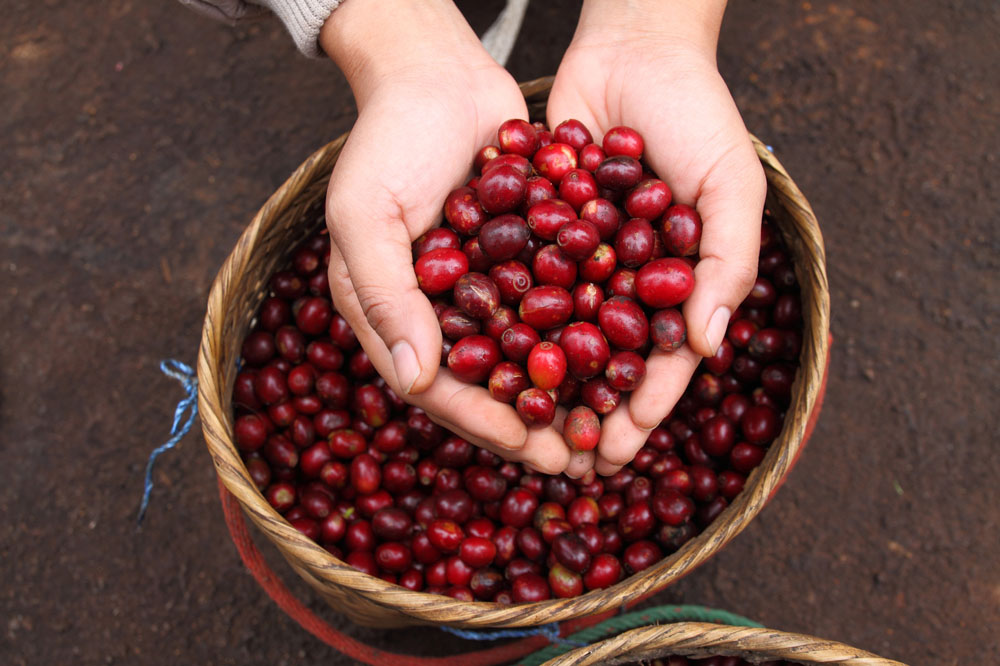
Chocolate color, grain type, complete Yemeni coffee flavor, character, taste and manor
Yemeni coffee is derived from hundreds of years old arabica coffee trees, all grown at altitudes above 3000 feet. For hundreds of years, the cultivation and production methods specific to Yemeni coffee have remained almost unchanged. Coffee seedlings are first cultivated in nurseries and then transplanted to high altitudes. No pesticides or fertilizers are used in the cultivation process. After maturity, coffee beans are naturally dried on coffee trees and shelled by stone mills.

Flavor Unique Grain Type Complete Yemeni Coffee Flavor, Character, Taste and Manor
Yemeni coffee is derived from hundreds of years old arabica coffee trees, all grown at altitudes above 3000 feet. For hundreds of years, the cultivation and production methods specific to Yemeni coffee have remained almost unchanged. Coffee seedlings are first cultivated in nurseries and then transplanted to high altitudes. No pesticides or fertilizers are used in the cultivation process. After maturity, coffee beans are naturally dried on coffee trees and shelled by stone mills.
Refreshing, giving people an endless aftertaste of Yemeni coffee flavor, characteristics, taste and manor
Yemeni coffee originated from Arabian coffee trees hundreds of years ago, all produced in areas above 3000 feet above sea level. For hundreds of years, the unique planting and production methods of Yemeni coffee have remained almost unchanged. The seedlings of Yemeni coffee trees are first cultivated in nurseries and then transplanted to high elevations. Pesticides and fertilizers are not used in the breeding process. Mature coffee beans are naturally dried on coffee trees and shelled by stone grinding.

The Italian organic agronomist's trip to Hainan Mountain Coffee made him marvel at the charm of siphon coffee.
Rompuy tasted the waterfall coffee in Qiongzhong. Luo Pei inspected Yangshan Wetland in Haikou. In 2014, Ms. Gao Gao, founder of Squirrel School, a natural education institution in Haikou, went to Europe to study organic agriculture and got to know Mr. LorenzoPeris (Chinese name Lopei), an Italian organic agriculture expert. In early January this year, Mr. Lopei went to Shanghai to participate in organic agriculture.

The taste of civet coffee is very mellow. Introduction to the characteristics of fine coffee in the manor area.
The cat has a special ability of orientation, which is guided by the incense secreted by the cystic incense glands. When it is active, all the prominent objects along the way, such as tree trunks, stakes and stone edges in the habitat, will often be foamed with the secretion of incense glands, commonly known as wiping piles, which acts as a marker in the field. it also plays a liaison role for other similar species. When it gets food or encounters

Why are Yemeni coffee beans so rare now?
People have heard a lot about Ethiopian coffee. Although Ethiopia was the first country in the world to discover coffee, in the 17th century, the first Yemeni coffee was exported to Europe through the ancient port of Mocha. Ethiopia, which is across the sea from Yemen, also sells coffee through the port of Mocha. The Yemeni mocha is the coffee trade of the World Office.

With chocolate color, complete grain shape, Yemeni coffee flavor, characteristics, taste and manor
Yemeni coffee originated from Arabian coffee trees hundreds of years ago, all of which are produced in areas above 3000 feet above sea level. For hundreds of years, the unique planting and production methods of Yemeni coffee have remained almost unchanged. The seedlings of Yemeni coffee trees are first cultivated in nurseries and then transplanted to high elevations. Pesticides and fertilizers are not used in the breeding process. Mature coffee beans are naturally dried on coffee trees and shelled by stone mill.

Introduction to the more famous coffee manor
La Minita Farm (La Minita) most of Costa Rica's farms use water washing to produce bright, lively and sour coffee beans, and the neatness of the farm and the good security of the area make it known as Switzerland in the country's coffee country. La Minita Farm is located in a place called Tarrazu south of the capital San Jose; marks the Tarra

Unique Grain shape complete Yemeni Coffee Variety characteristics introduction to Flavor Coffee beans in Manor
Yemeni coffee originated from Arabian coffee trees hundreds of years ago, all produced in areas above 3000 feet above sea level. For hundreds of years, the unique planting and production methods of Yemeni coffee have remained almost unchanged. The seedlings of Yemeni coffee trees are first cultivated in nurseries and then transplanted to high elevations. Pesticides and fertilizers are not used in the breeding process. Mature coffee beans are naturally dried on coffee trees and shelled by stone grinding.

Description of Flavor of Coffee Bean and Red Wine by Flavor description Grinding scale production area Manor
The processing method of coffee bean and red wine is described in general. In general, the processor injects carbon dioxide into the container to prevent oxidation from producing volatile acid. this process is called lactic acid fermentation, which produces malic acid and stone acid. the stone acid is relatively stable, so the beans fermented by lactic acid are more sour, with cheese flavor, nutty flavor and cream flavor.

Sidamo Coffee Bean Flavor Description Manor Production Area Variety Characteristics Treatment Method Introduction
In Ethiopian sun-baked beans, impurities such as small stones or foreign objects such as twigs are usually found, so special care should be taken when grinding. Although there are these small shortcomings, it does not affect his taste. The most worth mentioning is Sidamo's mocha caffeine. It is a natural decaf coffee. Try the sun coffee and feel the wild desert style day.

Yemeni Moha Coffee the latest introduction of Yemeni coffee Yemeni coffee has a unique flavor
Yemeni coffee originated from Arabian coffee trees hundreds of years ago, all of which are produced in areas above 3000 feet above sea level. For hundreds of years, the unique planting and production methods of Yemeni coffee have remained almost unchanged. The seedlings of Yemeni coffee trees are first cultivated in nurseries and then transplanted to high elevations. Pesticides and fertilizers are not used in the breeding process. Mature coffee beans are naturally dried on coffee trees and shelled by stone mill.